


 Book a call
13 March 2026
Performance Marketing vs Brand Marketing: Key Differences & Which One Is Better?
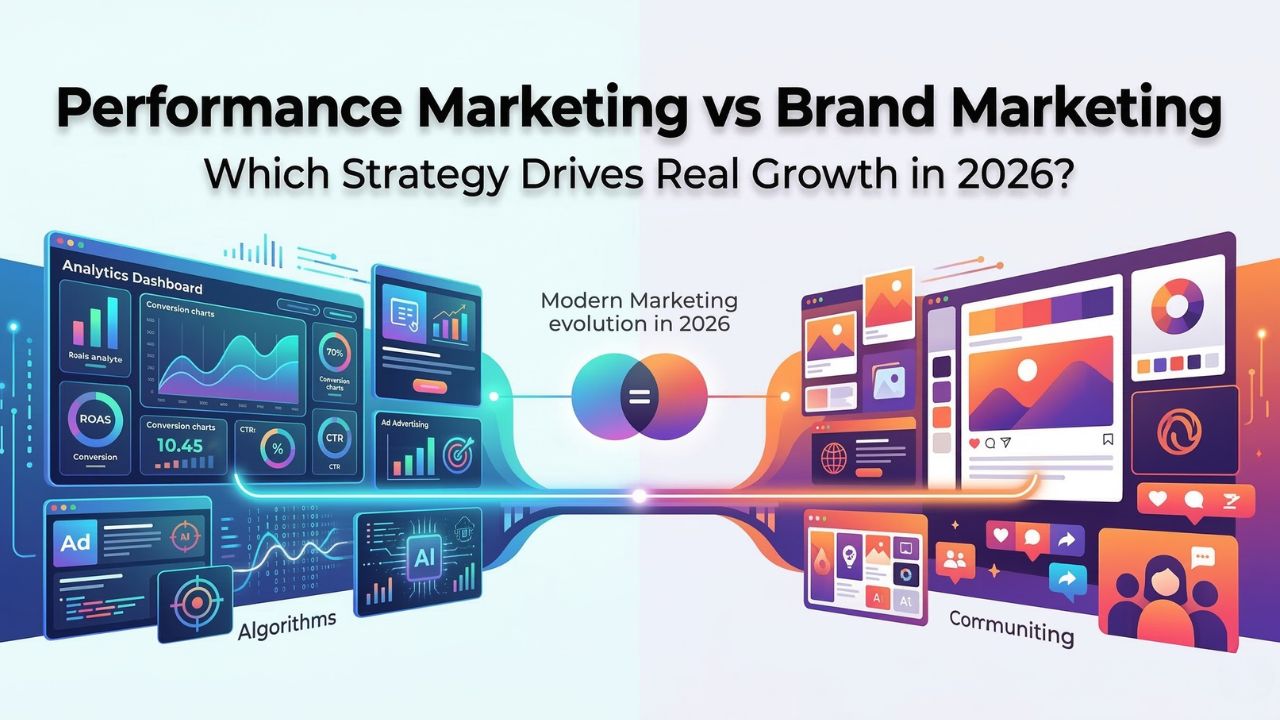
The digital marketing landscape has evolved rapidly in recent years. With the rise of artificial intelligence, automation, and advanced analytics, businesses now have more opportunities than ever to reach their audiences effectively. However, two marketing approaches remain at the core of most successful strategies: performance marketing and brand marketing.
Performance marketing focuses on measurable outcomes such as clicks, leads, and conversions. Brand marketing, on the other hand, focuses on building long-term recognition, trust, and emotional connection with the audience. While these strategies serve different purposes, both are essential for sustainable business growth.
In 2026, companies that balance short-term performance campaigns with long-term brand building are more likely to achieve consistent growth and maintain a strong competitive position in the market.
What is Performance Marketing?
Performance marketing is a results-driven marketing approach where advertisers pay only when a specific action occurs. These actions may include clicks, leads, app installs, or purchases.
This model is widely used across digital platforms because it allows marketers to track campaign performance in real time and optimize strategies based on data.
Common performance marketing channels include:
- Paid search advertising
- Social media advertising
- Affiliate marketing
- Display advertising
- Sponsored digital campaigns
One of the biggest advantages of performance marketing is measurable return on investment (ROI). Marketers can monitor metrics such as cost per acquisition, click-through rate, and conversion rate to evaluate campaign performance.
In 2026, artificial intelligence will play a major role in improving performance marketing. AI-powered tools analyze user behavior, optimize ad placements, and automatically adjust bidding strategies to maximize results. This allows marketers to reach the right audience at the right time while improving efficiency and reducing wasted ad spend.
What is Brand Marketing?
Brand marketing focuses on building a strong and recognizable identity for a company. Instead of focusing solely on immediate conversions, brand marketing aims to create long-term awareness, trust, and emotional connections with customers.
Effective brand marketing strategies often include:
- Storytelling campaigns
- Visual brand identity development
- Content marketing
- Influencer collaborations
- Social media engagement
A strong brand helps businesses stand out in competitive markets. Customers are more likely to purchase from brands they recognize and trust, even when similar alternatives exist.
Brand marketing also improves customer loyalty and long-term value. When customers develop trust in a brand, they are more likely to return for repeat purchases and recommend the brand to others.
Modern AI tools also support brand marketing by analyzing customer sentiment, monitoring online brand mentions, and providing insights into audience perceptions.
Performance Marketing vs Brand Marketing
| Performance Marketing | Brand Marketing |
|---|---|
| Focuses on measurable results such as clicks and conversions | Focuses on brand awareness and perception |
| Designed to generate short-term revenue | Designed to build long-term brand value |
| Campaigns are highly data-driven and optimized frequently | Campaigns rely on creativity and storytelling |
| Performance Marketing | Brand Marketing |
|---|---|
| Results are measured using metrics like CPA and ROI | Success is measured through awareness and engagement |
| Generates immediate traffic and sales | Strengthens market positioning over time |
This comparison shows that the two strategies serve different purposes. Rather than replacing each other, they work best when used together to create a balanced and effective marketing strategy.
Importance of Performance Marketing in the AI Era
Artificial intelligence has transformed performance marketing by making campaigns more efficient and data-driven. AI systems can analyze large volumes of user data to identify patterns in customer behavior.
Key benefits of AI-powered performance marketing include:
- Improved audience targeting
- Automated bidding strategies
- Predictive analytics for better decision-making
- Personalized advertising experiences
For example, AI algorithms can determine which audience segments are most likely to convert and automatically prioritize ad delivery to those users. This improves campaign performance while reducing unnecessary ad spend.
As marketing platforms continue to evolve, performance marketing will rely increasingly on automation and intelligent data analysis.
Importance of Brand Marketing in the AI Era
In the age of AI-driven search engines and recommendation systems, strong branding has become even more important. Search algorithms often prioritize trusted brands when presenting content to users.
Brand marketing offers several long-term benefits:
- Higher brand recognition
- Increased customer trust and credibility
- Better customer retention
- Stronger differentiation in competitive markets
AI-powered sentiment analysis tools allow companies to monitor how customers perceive their brand across social media, reviews, and online discussions.
In 2026, successful brands focus on authenticity, storytelling, and consistent messaging to build meaningful relationships with their audiences.
Brand Marketing Measurement
Historically, measuring brand marketing effectiveness has been challenging. However, modern analytics tools and AI technologies now provide more accurate insights into brand performance.
Common brand marketing metrics include:
- Brand awareness
- Branded search traffic
- Social media engagement
- Brand recall
- Customer sentiment analysis
These metrics help businesses understand how audiences perceive their brand and whether branding efforts are influencing customer behavior.
By analyzing these data points, companies can refine their messaging and strengthen their overall brand strategy.
Performance Marketing for 2026
Performance marketing in 2026 is increasingly driven by data intelligence and automation. As digital platforms integrate advanced machine learning capabilities, marketers can run highly optimized campaigns with minimal manual intervention.
Key trends shaping performance marketing include:
AI-powered campaign optimization
Algorithms automatically adjust bidding strategies and ad placements to maximize results.
Predictive audience targeting
AI can identify users who are most likely to convert based on behavioral patterns.
Advanced attribution models
Modern attribution systems analyze multiple touchpoints in the customer journey to determine which marketing channels contribute to conversions.
Automated ad personalization
Ads are dynamically customized for different audience segments to improve engagement.
These innovations allow businesses to scale campaigns more efficiently and achieve better performance outcomes.
Brand Marketing Strategies for 2026
Brand marketing strategies are also evolving with new technologies and changing consumer expectations.
Key approaches include:
AI-driven content personalization
Brands use data insights to deliver personalized content experiences that resonate with their audiences.
Thought leadership content
Publishing educational articles, industry insights, and expert opinions helps build credibility and authority.
Community-driven marketing
Successful brands focus on building communities around their products and values.
Consistent visual identity
Maintaining a clear visual style across all channels strengthens brand recognition and trust.
By combining creativity with technology, businesses can build powerful brand identities that last.
The “60/40” Rule of Balance
Many marketing experts recommend the 60/40 rule, which suggests allocating approximately 60 percent of the marketing budget to brand building and 40 percent to performance marketing.
This balance allows businesses to generate immediate sales while simultaneously building long-term demand.
Brand marketing creates awareness and interest among potential customers, while performance marketing captures that demand and converts it into measurable results.
Maintaining this balance helps businesses achieve both short-term revenue and long-term brand growth.
Strategic Objectives Comparison
Understanding these strategic differences helps companies design more effective marketing strategies.
| Strategic Factor | Performance Marketing | Brand Marketing |
|---|---|---|
| Primary Goal | Conversions and sales | Awareness and trust |
| Time Horizon | Short-term impact | Long-term growth |
| Key Metrics | CPA, CTR, ROI | Engagement, brand recall |
| Campaign Focus | Data optimization | Storytelling and creativity |
Best Practices to Harmonize Performance & Brand Marketing
Businesses that successfully integrate brand and performance marketing often achieve stronger results.
Best practices include:
- Maintaining consistent messaging across all marketing channels
- Using data insights to improve campaign strategies
- Addressing multiple stages of the customer journey
- Combining content marketing with paid advertising
- Continuing long-term investment in brand development
When these strategies are aligned, companies can create a balanced marketing system that supports both immediate results and long-term growth.
Frequently Asked Questions
What is the main difference between performance marketing and brand marketing?
Performance marketing focuses on measurable results such as clicks and sales, while brand marketing focuses on building long-term awareness, trust, and emotional connections with customers.
Which strategy is better for businesses?
Both strategies are important. Performance marketing delivers quick results, while brand marketing supports sustainable growth and customer loyalty.
Why is brand marketing important in 2026?
AI-driven search and recommendation systems often favor trusted brands, making strong branding essential for visibility and credibility.
Can startups use both strategies?
Yes. Many startups begin with performance marketing to generate traction and gradually invest in brand marketing as they grow.
Conclusion
Performance marketing and brand marketing are two essential pillars of modern digital strategy. Performance marketing focuses on measurable outcomes and immediate revenue, while brand marketing builds long-term trust, recognition, and customer loyalty.
In 2026, businesses that effectively combine these strategies can achieve both short-term results and sustainable long-term growth. By leveraging AI-powered tools and maintaining a balanced marketing approach, companies can build strong brands while continuously improving marketing performance.